Support for disabled children
We could offer more support to families with your donations.
Donate nowDisabled children should have every opportunity to grow and thrive. For many families, this is only possible with extra support.
Types of support for families with disabled children
A disabled child should have the same opportunities as any other child.
But caring for a disabled child or young person can be challenging.
The tailored support we offer helps families cope – and gives disabled children a chance to thrive.
In 2025/26, we supported 13,071 disabled children, young people and their families.
Emotionally it was a lot to take on. Getting out to Action for Children sessions helped normalise things. The support workers feel like family.
Kausar, mum to three children with additional needs
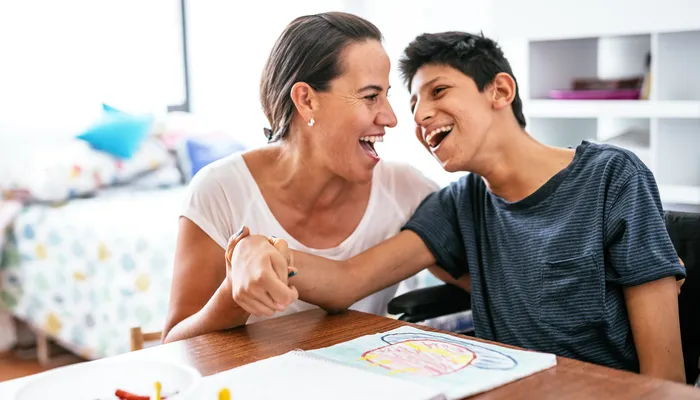
Action for Children’s short breaks services offer lots of activities and opportunities. They're a way for disabled children to have fun and develop their independence.
Short breaks and outings give parents and siblings time to recharge, too. They’re a lifeline for families who feel overwhelmed.
In 2025/26, we supported 4,370 disabled children and young people through 52 short breaks services.
We provide a key worker to support disabled children and their families. They work with the family to make sure the young person’s opinions get heard. If they need it, we can speak on their behalf.
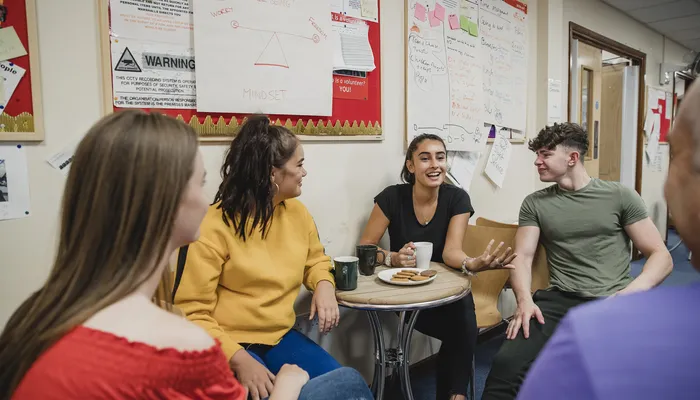
The key worker will help children and young people build the confidence to lead their own lives. This includes teaching or helping with life skills, friendships, community activities and getting around.
For those with more complex needs, it may be about celebrating the small steps. We support young people to reach their full potential, whatever that may be.
The Equality Act 2010 defines disability as any physical or mental impairment that has a ‘substantial’ and ‘long-term’ negative effect on a person’s ability to do normal daily activities. Long-term is defined as has lasted, or is expected to last, for at least 12 months. It can be difficult to apply this definition to a baby or young child.
All babies and young children naturally need help with ‘daily activities’, so any potential disability is often difficult to identify using this definition alone. Children also develop at different rates, so it can therefore be hard to tell if a child has a disability until they are older.
The main categories of disability and health conditions affecting children include:
- Chronic and long-term health conditions such as epilepsy, Type 1 diabetes, cystic fibrosis, juvenile idiopathic arthritis and severe asthma.
- Learning disabilities such as those associated with Down's syndrome, Fragile X syndrome and Williams syndrome
- Mental health conditions such as severe anxiety disorders, obsessive-compulsive disorder (OCD), depression, post-traumatic stress disorder (PTSD) and eating disorders.
- Neurodevelopmental conditions such as autism, attention deficit hyperactivity disorder (ADHD), developmental coordination disorder (dyspraxia) and Tourette’s syndrome.
- Physical disabilities such as cerebral palsy, muscular dystrophy, spina bifida, limb differences and acquired brain or spinal cord injury.
- Sensory impairments such as visual impairment, hearing impairment and multi-sensory impairment (deafblindness).
- Speech, language and communication disorders such as developmental language disorder, childhood apraxia of speech, severe speech sound disorder and stammering.
It can be hard for families to know where to look for help. We help families find the support they need in their area. We do this with disabled children and young people, so they get to say what works for them too.
Our work doesn’t stop there. We empower parents and carers to take part in forums where they can share their views and help improve local services for all disabled children.