Youth mental health and wellbeing
Help young people access the right support at the right time
Donate nowMental health problems can affect every part of a young person's life. We support children and young people through specialist care, helping them build resilience and look forward to a brighter future.
We should all be talking more about how we’re feeling - not waiting until there’s a serious problem.
Most public funding focuses on dealing with crisis. But early intervention gives more families the confidence to care for their wellbeing and get help when they need it.
Our work helps equip young people and their parents with skills to cope with life. One in 10 children in the UK experience mental health problems. Of those we work with, 74% show an improvement in their mental health.
Common mental health problems experienced by young people
These are lifelong differences in how the brain develops. They're not mental health conditions but they can affect emotional wellbeing.
- Attention deficit hyperactivity disorder (ADHD): Finding it harder to focus, stay organised, control impulses or manage energy levels.
- Autism: Differences in communication, social interaction and sensory processing, as well as a preference for routines or predictability.
Rising poverty, social media harms, pressures of school and the lasting effects of the pandemic have all had an impact on youth mental health.
The government’s Youth Matters: State of the Nation report highlights other issues affecting young people’s mental health, including:
- Loneliness and isolation, sometimes caused by a lack of places for young people to socialise with each other.
- Feeling unsafe or being bullied, both online and in real life.
- Worry about money, future opportunities and the environment.
- Not getting enough support for mental health in schools.
Mental health difficulties can affect people in different ways. Some signs that a young person may be struggling can overlap with typical teenage behaviour, but here are some to look out for:
- Becoming angry, tearful or withdrawn.
- Losing interest in hobbies or activities they normally enjoy.
- Sleeping much more or less than usual or feeling constantly tired.
- Missing school, struggling with homework or getting worse grades than usual.
- Talking about feeling hopeless, worthless or trapped.
- Using alcohol or drugs.
- Taking more risks than usual, or becoming impulsive or aggressive.
- Not looking after themselves.
Worried about your child's mental health?
Phone 999 or go to the nearest A&E.
Phone NHS on 111 or contact 111 online (England only).
Call the Samaritans on 116 123.
Text SHOUT to 85258 to contact Shout.
Phone Childline on 0800 1111 or chat online with a counsellor (under 19s only).
I have the space to talk about what I need to talk about. Counselling sessions are a time when I feel free of stress.
A young person supported by Action for Children
What support is available for young people struggling with their mental health?
When I was younger, I didn't have people coming in to talk to me about mental health. I had no idea how to talk about it or that it was okay to talk about it.
Georgia, a Young Persons worker with Action for Children
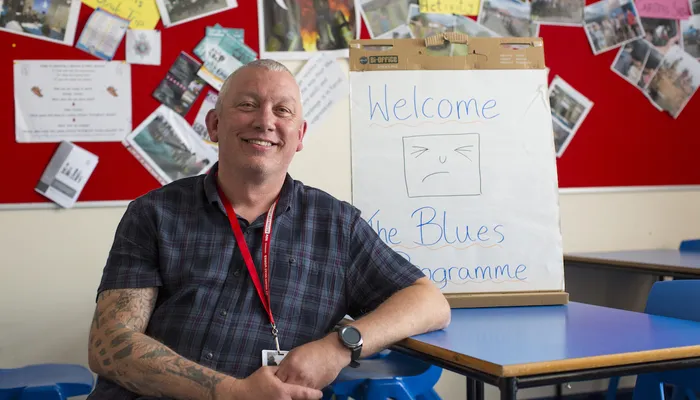
The Blues Programme gets young people talking about mental wellbeing. Our existing Blues Programme teams are either funded through local authorities, pupil equity funding or through voluntary income via charitable trusts, foundations and corporate partners.
Over six weeks, students aged 13-19 get comfortable talking about mental health. They learn how to manage and improve low mood, and anxious thoughts and feelings.
I used to overthink things. Then my anxiety would take over. Now I know to remind myself it's OK to feel that emotion and how to move past it
Harvey Sparrow, young person on the Blues Programme
Parent Talk is our online hub for down-to-earth parenting advice. Mental and emotional wellbeing is a key part of the support we offer. Parents can browse our advice articles, all created or curated by our parenting coaches. Or they can speak directly to a coach through our one-to-one live chat.
Since 2018, we’ve supported over 450,000 parents online. This includes online advice and more than 10,000 one-to-one conversations. Around 9 in 10 parents rate the service four or five out of five, showing the difference it makes.
We offer a regional live chat service
Our text and email service Sidekick supports young people from ages 13-18 or up to 25 for people with additional needs.
Sidekick is there to listen, talk through problems and offer tips for coping when things get tough. It's 100% confidential, and you'll never be judged for what you say.